
Have you ever seen a billboard on the street and searched for the advertised brand on Google? This behavior shows how outdoor advertising can encourage further online interactions. A well-designed advertisement can capture attention and spark curiosity beyond the physical location.
Out-of-Home (OOH) advertising, including billboards and digital screens, can connect offline exposure with online activities. According to the 2019 Nielsen and OAAA study, 33% of surveyed OOH viewers used a search engine to find information about an advertiser. The study highlights the potential of OOH to encourage online brand discovery.
So, how can OOH advertising turn public exposure into online searches? Here are several factors businesses should consider.
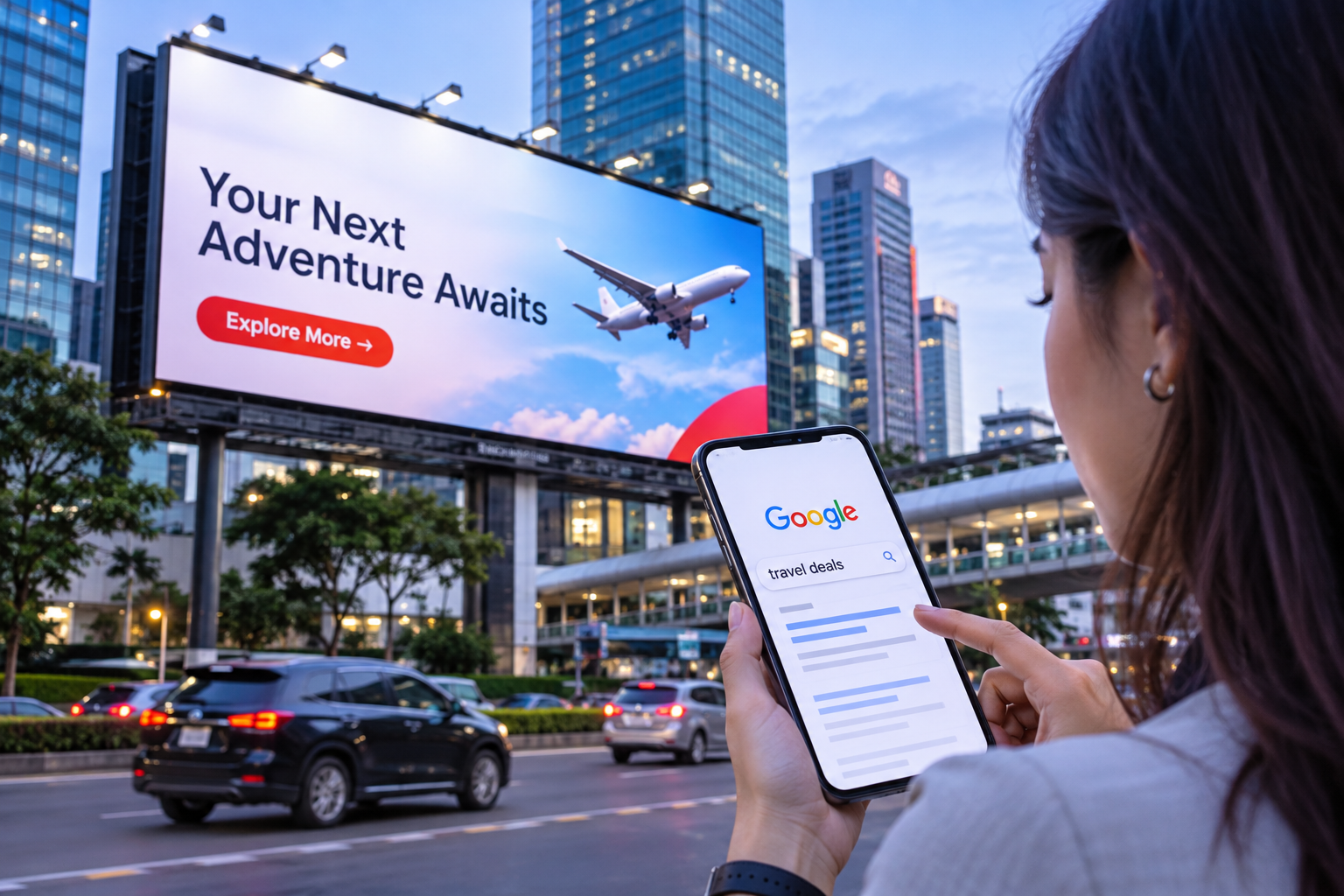
How OOH Advertising Drives Brand Searches on Google
OOH advertising can introduce a brand to audiences through public spaces. After seeing an advertisement, some viewers may want to learn more about its products, services, or company.
This process can happen in several stages. First, audiences notice a billboard or digital screen. Next, the advertisement captures their attention through its message or visual presentation. Finally, interested viewers may remember the brand name and search for it on Google.
In digital marketing, this activity is known as a branded search. It happens when users search for a specific brand name rather than a general product category.
Therefore, OOH can serve as an initial touchpoint that encourages audiences to explore a brand online.
What Makes OOH Advertising Encourage Online Searches?
Not every outdoor advertisement motivates audiences to search for a brand. Several creative elements can make an advertisement easier to recognize and remember.
1. Make the Brand Name Easy to Recognize
The brand name should remain one of the most visible elements in an advertisement. Place the logo and brand name clearly so audiences can recognize them within seconds.
Avoid complicated wording or unclear brand references. When people can easily remember a brand name, they can search for it more easily later.
2. Use Short and Engaging Messages
People usually have limited time to view billboards and digital screens. Therefore, advertisements should communicate their main message quickly.
Use concise headlines that create interest without overwhelming viewers. Long descriptions can make the advertisement harder to understand, especially in busy public areas.
3. Create Strong and Consistent Visuals
Visual elements help advertisements attract attention and reinforce brand recognition. Colors, typography, images, and layouts should reflect the brand’s identity.
However, attractive visuals must also support clear communication. Keep the brand name and main message visible. Avoid unnecessary elements that distract viewers from the advertisement’s purpose.
Read Also: What Makes OOH Advertising Easy for Audiences to Remember?
How to Connect OOH Campaigns with Digital Marketing
After attracting attention, brands should make relevant information easy to find online. This step helps audiences continue their journey after seeing an outdoor advertisement.
Here are several strategies businesses can apply.
- Optimize the Brand Website. Make company information, products, services, and contact details easy to find. Ensure the website also works smoothly on mobile devices.
- Strengthen Google Visibility. Maintain consistent brand information across search results. Complete your Google Business Profile when relevant to your business.
- Keep Brand Messages Consistent. Use the same brand identity, product names, and key messages across billboards, digital screens, websites, and social media.
- Use QR Codes When Relevant. QR codes can direct audiences to product catalogs, landing pages, or promotional offers. Make sure they remain visible and easy to scan in the selected location.
Read Also: Why Brands Still Need an Offline Presence in the Digital Era
How to Measure OOH’s Impact on Brand Searches
Brands can evaluate digital performance to understand how audiences respond to outdoor campaigns. Several indicators can help measure changes in online interest.
- Branded Search: Monitor changes in searches containing the brand name.
- Website Traffic: Track website visits during the campaign period.
- Google Search Console: Review impressions and clicks from brand-related search queries.
- Google Analytics: Monitor users, sessions, and website traffic sources.
For better insights, compare performance before, during, and after the campaign. Also, consider other marketing activities, such as paid search, social media, and promotional campaigns.
This approach helps businesses understand the relationship between OOH exposure and online activity. However, an increase in searches does not automatically prove that OOH caused the change.
FAQ About OOH Advertising and Brand Searches
Can billboard advertising increase brand searches on Google?
Yes. Billboards can introduce brands to audiences and spark curiosity. Interested viewers may search for additional information through Google.
What does branded search mean?
Branded search refers to searches that include a specific brand or company name. For example, users may type a company’s name directly into Google.
How can businesses measure OOH’s impact on online searches?
Businesses can monitor branded search performance through Google Search Console. They can also track website traffic through Google Analytics and compare results across campaign periods.
Conclusion
OOH advertising does more than introduce brands to audiences in public spaces. It can also encourage people to search for additional information online. Clear brand names, engaging messages, and strong visuals can help billboards and digital screens create this opportunity.
Therefore, combining OOH advertising with digital marketing can support a more integrated marketing strategy.
Contact Rebound Ads,your trusted billboard and videotron advertising partner, today. Get personalized outdoor advertising recommendations tailored to your business and campaign needs!
